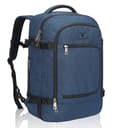
What you are actually replacing
Four things. One of them is genuinely hard to replace, one is easy, and two are cheaper elsewhere than you would guess.
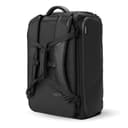
- The shell, and this is the hard one. 1680D CORDURA ballistic nylon is the heaviest-duty fabric any maker in this comparison puts a number on. Nothing in our registry matches it.The highest published denier we carry is the Cotopaxi Allpa’s 840D — exactly half — and the next premium pack down, the Peak Design, publishes 400D. If you bought an Aer because you wanted a bag that outlives the airline, no page can honestly tell you a cheaper pack publishes the same fabric.
- The fit. Easy to match and easy to beat, but worth stating plainly because Aer gets too little credit for it: 21.5 x 13.5 x 9 inches is inside the standard 22 x 14 x 9 inch box on height and width and level on depth. Most premium 35-45 L packs are over the box on at least one axis. Two alternatives below do better; one matches it exactly.
- The lifetime warranty.Three alternatives here match it in kind: Nomatic’s lifetime warranty, Cotopaxi’s Guaranteed for Good for the lifetime of the product, and Peak Design’s lifetime warranty — the last of which carries a channel restriction the others do not. Aer’s FAQ confirms the cover and the claim process but does not itemize exclusions, so we do not characterize what it leaves out.
- The look.Not a spec, and we will not pretend to grade it. What is checkable is that two packs below are also plain, dark, structured bags that read as luggage in an office rather than as hiking gear — which is most of why people cross-shop these in the first place.
The fit table, where Aer deserves more credit than it gets
Multiply the 22 x 14 x 9 inch allowance the US majors publish and you get 2,772 cubic inches— about 45 liters of total space, fabric and harness included. Published exteriors, multiplied out:
- Aer Travel Pack 4 35L — 21.5 x 13.5 x 9 in (2,612 cu in). Half an inch inside on height, half an inch inside on width, exactly level on depth. Inside the allowance on every axis, and 160 cubic inches smaller than the box itself.
- Aer Travel Pack 4 28L — 19.25 x 12.75 x 8 in (1,964 cu in). Margin on all three axes: 2.75 in on height, 1.25 on width, an inch on depth. This one clears a strict European sizer as published.
- Nomatic Travel Bag 40L — 21 x 14 x 9 in (2,646 cu in). Level on width and depth, an inch inside on height. Five more liters than the Aer 35L in 34 more cubic inches of box, which tells you how little of the Nomatic is wall.
- Peak Design Travel Backpack 30L — 20.9 x 13 x 7 in (1,902 cu in), 7.9 in deep expanded. Inside the box on all three axes in both modes — the best published fit on this page, and the direct answer to the Aer 28L.
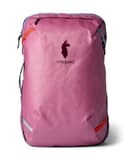
- Cotopaxi Allpa 35L — 22 x 12 x 10 in (2,640 cu in). Level on height, two inches inside on width, an inch over on depth. The width margin is what makes it easy at a narrow sizer; the depth is the bet you are taking.
- SwissGear Travel Tech Elite — 18 x 11.5 x 7 in (1,449 cu in). Four inches of margin on height, 2.5 on width, two on depth. That is what 31.4 liters buys you.
- Hynes Eagle 40L — 20.1 x 13.4 x 9.8 in (2,640 cu in). Inside on height and width, 0.8 in over on depth.
Read that list and the Aer stops looking like an indulgence and starts looking like a deliberate engineering choice: it is one of very few premium packs that does not buy its liters by going deeper than the airlines allow. The carrier-by-carrier numbers, including the smaller European limits, are in our carry-on size guide, and the packs that clear the US box outright are on carry-on backpacks that fit 22 x 14 x 9.
The same structural situation applies to the other direct-sale one-bag brand people ask about, with a different fabric story and a different weight penalty: Tortuga Travel Backpack alternatives.
Weight, and what 1680D actually costs
Capacity per empty pound, from each maker’s published figures: Hynes Eagle 40L 18.2, Cotopaxi Allpa 35L 11.9, Nomatic 40L 11.7, SwissGear 10.5, Peak Design 30L 8.5 standard and 10.4 expanded — and the Aer Travel Pack 4 at 9.0 for the 35L and 8.0 for the 28L. Against the 7 kg (15.4 lb) cabin allowance Emirates and Qantas publish, those bags spend 14, 19, 22, 19, 21, 25 and 23 percent of the allowance before you pack a shirt.
Here is the trade in one line. Aer’s 35L weighs 0.96 lb more than the Cotopaxi Allpa 35L for exactly the same stated capacity, while publishing double the shell denier. Nearly a pound, for fabric. Whether that is a bargain or a tax depends entirely on how you use a bag: a pack flown twice a year never discovers the difference between 840D and 1680D, and a pack thrown in the back of vans four days a week discovers it immediately. Aer’s own lighter fabrics — X-Pac at 3.75 lb, Ultra at 3.56 lb — charge you more to carry less of that durability, which is at least an honest way to price it.
The 28L is where the arithmetic gets uncomfortable: 8.0 liters per empty pound is the lowest figure on this site, and the Peak Design 30L holds 27 liters at 3.17 lb in a smaller box. Every published empty weight we track, from 0.16 lb to 7.93 lb, is tabled in how much a travel backpack weighs.
One feature worth a second look: the suspended laptop pocket
Aer publishes its laptop compartment as a padded suspendedpocket with a soft lining, fitting up to 16 inches. “Suspended” is doing real work in that sentence: it means the sleeve hangs from the top of the compartment rather than sitting on the base of the bag, so when you set the pack down the laptop does not land with it. That is a construction detail, not a material claim, and it is the kind of thing worth looking for in an alternative.
What the alternatives publish about their own sleeves: Nomatic states a 16-inch laptop sleeve in a dedicated padded tech compartment; the Peak Design 30L states a 16-inch sleeve (maximum 16 x 11 x 1 in) plus a separate 10-inch tablet sleeve; SwissGear states a 16-inch ScanSmart section that lies flat for security plus an 11 x 8.5 in tablet pocket; the Allpa 35L states 15 inches, which rules it out for a 16-inch machine; the Hynes Eagle states 15.6. None of them publishes the word suspended, so we do not credit any of them with it. What a stated sleeve size is and is not — it is a screen diagonal, not a measurement of your computer — is covered on travel backpacks with a laptop compartment.
Which alternative, by reason for leaving
“Too expensive”
The Hynes Eagle 40L. A 40-liter clamshell with a real hip belt and compression straps at 2.2 lb, for a fraction of any Aer. It is the single biggest weight saving available here: you hand back 1.7 lb against the Travel Pack 4 35L and gain five liters. What you lose is everything Aer puts in writing — no published fabric spec beyond “water-repellent polyester,” no warranty term at all, and no lockable zips. Treat it as a few-years bag, which is how we frame it on travel backpacks under $100.
“I want the same bag, lighter”
Cotopaxi Allpa 35L. Same stated 35 liters, 2.94 lb against 3.90, a published 840D TPU-coated and ballistic ripstop recycled shell, a split clamshell with zip mesh dividers, and Guaranteed for Good for the lifetime of the product with no channel restriction we can find. Two trades, both real: it is an inch over on published depth where the Aer is level, and it states a 15-inch laptop sleeve where the Aer states 16. If you carry a 16-inch machine, that second line may settle the whole page.
“I want more bag for the same money”
Nomatic Travel Bag 40L. Five more liters than the Travel Pack 4 35L, a matching 16-inch sleeve, a published lifetime warranty, the same structured dark aesthetic, and it converts to a duffel without repacking. Its 21 x 14 x 9 in exterior is level with the box rather than inside it, so there is no margin anywhere — and a structured bag has no give at a sizer. Nomatic publishes no shell denier, which is the honest gap against Aer; our full write-up is the Nomatic Travel Bag 40L review.
“I am replacing the 28L”
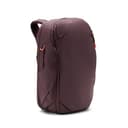
Peak Design Travel Backpack 30L. It is the closest thing we cover to the small Aer: 27 liters standard and 33 expanded, 3.17 lb, 20.9 x 13 x 7 in and inside the carry-on box in both modes, a 16-inch sleeve plus a tablet sleeve, metal hardware, a weatherproof recycled shell and a lifetime warranty. Two caveats we state everywhere: its shell is published at 400D, a quarter of Aer’s denier, and the hip belt is a separate accessory rather than part of the bag. If a lower-denier premium shell is the thing you were trying to avoid, this is not your bag — and we have the same conversation from the other direction on Peak Design Travel Backpack alternatives.
“It is really a work bag for me”
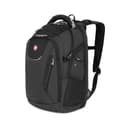
Then stop paying for travel capacity. The SwissGear Travel Tech Elite publishes 31.4 liters at 18 x 11.5 x 7 in and 3 lb, with a 16-inch ScanSmart laptop section that lies flat at security, an internal side-access shoe bag, an insulated side pocket and a trolley pass-through. It is a two-to-three-day bag and the brand says so. Read its warranty carefully: SwissGear’s own page puts backpacks at 3 years, or 6 bought direct, while its Amazon listing advertises 5 and 10 — the longer terms belong to its luggage line.
“It will not clear my carrier’s sizer”
Then the Aer is not your problem. On published figures the Travel Pack 4 35L is inside the standard US box on all three axes and the 28L has margin on all three — if yours is getting stopped, it is packed past its published depth, which is what happens to every soft bag loaded beyond capacity. Going smaller is the fix, not going sideways: the 30-liter class is on best 30L travel backpacks, and what actually happens at the gate is in what happens if your carry-on is too big.
A note on which Aer you are shopping
Worth checking before you compare anything, because the generations differ in exactly the figure this page is about. Aer’s own page lists the Travel Pack 3 as discontinued and replaced by the Travel Pack 4 35L. The TP3 was published at 21.5 x 13 x 9 in and 4.12 lb— a quarter-pound heavier than the TP4 for the same 35 liters and the same 1680D ballistic shell, which works out to 8.5 liters per empty pound. If you are reading a secondhand listing or an older review, make sure the weight you are comparing against is the one you would actually be buying. The X-Pac variants complicate it further: the TP3 X-Pac used a VX-42 sailcloth shell at 3.9 lb, and the TP4 X-Pac 35L is published at 3.75 lb.
What we are not claiming
We own none of these packs and have not run them side by side. Every dimension, weight, denier, sleeve size and warranty term above is the manufacturer’s own published figure, read from its own page on a dated visit and cited in the sources below; where a maker publishes nothing we print “Not published” rather than an estimate. Aer’s product pages return an automated-request error to a direct fetch, so its figures were confirmed by a domain-restricted search of aersf.com itself — the same fallback we use for every manufacturer that blocks us, recorded in the sources. We make no claim about the harness or hip belt of any Aer pack, because we did not find a published figure for one. There are no ratings, test results or awards on this page, because we have not run any.