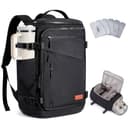
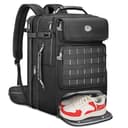
A shoe compartment does not add space. It reserves it.
This is the single most important thing to understand before you buy one, and no listing will tell you. A backpack has a fixed exterior volume. A shoe compartment is a fabric divider inside that volume, so whatever the shoes occupy, the clothes lose. A 40L bag with a pair of size-11 trainers in the bottom compartment is a 34L bag for everything else, give or take.
What you are buying, then, is not capacity. It is separation and access— soles away from clothes, and a pair you can pull out at a hotel door without opening the main compartment. Those are real benefits. They are just not the same benefit as “more room,” and the bags that advertise a shoe compartment hardest are often the ones whose stated capacity is least believable. Three of the six here publish a capacity that does not survive multiplying their own dimensions together; each write-up above says which one and by how much.
The three ways the compartment is built
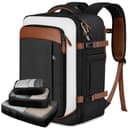
Bottom-access, vented, permanent.A zip across the bottom of the bag opens into a sealed section with ventilation holes. This is the design that works best, because it is reachable while the bag is standing up and the vents stop the section getting stale. The Vancropak and the MATEIN 52L both use it, and the Vancropak is the only bag here that states what size shoe fits (a US 10–12).
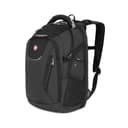
Internal zippered panel.A panel inside the main compartment unzips into a side-opening pocket. SwissGear’s wording for the Travel Tech Elite is exact — an “internal zippered shoe bag with side access” — and the mechanics follow from it: you get the separation, you get outside access from the flank, and the shoes are unmistakably eating main-compartment room because the compartment is the main compartment.
Collapsible. The floor of the shoe section folds flat when empty, so on the trips where you are wearing your only pair the volume comes back. The LOVEVOOK is the only bag we found that does this, and it has a two-position divider so you can choose where the floor sits. It is the design we would want on a far more expensive pack.
A fourth kind shows up constantly in search results and we excluded it: the detachable shoe pouch, where the “compartment” is a bag clipped or zipped inside. That is a shoe bag the maker chose for you, and the dedicated ones in our travel shoe bags roundup are better, cheaper and washable.
Choosing between the six
Buy the Vancropak 40L if you want the feature and nothing else.It is the only bag here that tells you what size shoe fits, the compartment is bottom-access and vented, and at 2.59 lb it is lighter than every other pick by more than half a pound. Its published 19 x 13 x 7 in is inside a standard carry-on box with room to spare, and even with the 2 in expansion open it is level with a 9 in depth limit rather than over it — which is more than the two bags below it can say. What you are not buying is a warranty, a known brand, or a believable capacity figure.
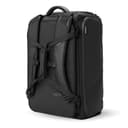
Buy the Nomatic Travel Bag 40L if the bag matters more than the feature. It is the one pack here we would recommend on its own merits with the shoe compartment taken away: a published 21 x 14 x 9 in, 3.42 lb, a 16 in laptop section and a lifetime warranty, and it carries as a duffel or a backpack without repacking. It also costs roughly ten times the Vancropak, and Nomatic will not tell you what size shoe the compartment takes. Our Nomatic Travel Bag 40L review covers the rest, including why a structured 40L at exactly 21 x 14 x 9 in has no give at a sizer.
Buy the SwissGear Travel Tech Elite if the trip is for work.At 31.4L it is the smallest pick here and it is not a one-bag pack, which is the honest limitation. What it has instead is the thing no other bag on this list offers: a brand that publishes a complete spec sheet and a warranty term you can look up, and a shoe section described precisely rather than vaguely. The side-access design is the right one for a bag you will be opening on a hotel luggage rack rather than a hostel floor. Note the warranty carefully — SwissGear’s own page puts backpacks at three years, not the five or ten the Amazon listing claims.
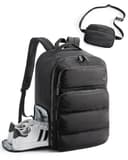
Buy the BAGSMART 35L if you pack two pairs. No other bag here claims to take more than one, and the sealed wet pocket plus the detachable crossbody pouch make it the most complete bag for a beach or pool trip. The cost is depth: at 9.44 in it is deeper than a standard carry-on box allows and well over the 8 in personal-item depth Spirit and Frontier publish, whatever its listing says about personal items. It is soft and it will squash, but that is a gamble, not a spec.
Buy the LOVEVOOK if you only sometimes pack shoes.The folding floor is the best idea on this page: empty, the compartment disappears and the main compartment is whole again. If your trips split between “one pair in the bag” and “wearing my only pair,” this is the design that does not punish you on the second kind. Ignore the 40L on the listing — 18 x 12.5 x 7 in is about 26L, and 26L is the number to plan around.
Buy the MATEIN 52L only if the bag can be checked.It is the best value here on feature count — three packing cubes, a toiletry bag, an insulated pocket, waist straps — and expanded it is 10.5 in deep, which is over the limit at every major US carrier. MATEIN is honest about that in its own dimensions, which is to its credit. Fly it zipped down to 21 x 13 x 9 in and it is a legitimate carry-on; open the expansion and plan on checking it. If what you want is the expansion rather than the shoes, the expandable travel backpacks roundup covers the whole class and the gate math that goes with it.
The cheaper alternative, said plainly
For about ten dollars, a set of zippered shoe bags does the separation job inside any backpack you already own, and does it better in one respect: you can wash the bag, or throw it away, which you cannot do with a compartment sewn into your luggage. It also contains a genuinely wet shoe, which a vented compartment is specifically designed not to do.
So if you are weighing a bag on this page against a better pack plus a shoe bag, buy the better pack. The 40L travel backpacks we rank highest all cost more than most of these and all carry better, and a pair of shoe bags closes the gap. The case for a built-in compartment is narrower than the listings imply: it is for the traveler who packs shoes on most trips, hates faff, and wants the pair reachable from outside. If that is you, it is worth the trade. If you pack shoes twice a year, it is not.
What to check before you buy
- That the compartment is stated, not implied.A zip at the bottom of a bag can be a compression panel, a rain-cover pocket or an expansion gusset. If the listing does not use the words “shoe compartment” or “shoe pocket”, assume it is not one. That rule is why several well-reviewed packs are absent from this page.
- Your shoe size against the compartment.Almost no maker publishes the compartment’s dimensions. The Vancropak states a US 10–12 and the BAGSMART states two pairs; nothing else here gives a figure. If you wear a US 13 or pack boots, a compartment sized for an average shoe is a compartment you will not use.
- Whether it is vented. A sealed, unvented shoe section holds everything a shoe holds, including the smell, and you are putting it next to your clothes with one layer of polyester in between. Vents are the detail that makes the feature pleasant to live with.
- The depth, not the liters. A shoe compartment is usually the deepest part of the bag, and depth is the dimension airlines are strictest about. The BAGSMART here is 9.44 in deep and the expanded MATEIN is 10.5 in, against the 9 in that American, Delta, United, JetBlue and Alaska all publish. Measure it the way a gate agent would, using how to measure a backpack.
- What you are actually paying for.The Nomatic above costs roughly ten times the Vancropak. Almost none of that difference is the shoe compartment — it is the fabric, the hardware, the structure and the lifetime warranty. Decide which of those you are buying.
How we picked, and what we left out
Every bag above had to clear the same three gates: a stated shoe compartment, a live buyable price on the day we published, and a travel-backpack form factor. Some things that got cut for reasons worth knowing:
- Gym backpacks.Search for a backpack with a shoe compartment and most of what comes back is gym gear — 25L bags with a vented end pocket, no laptop sleeve, no luggage strap and no sizer math. They are good at what they do and they are not travel bags, so none is listed here.
- Weekender duffels. A shoe compartment is close to standard on a weekender, and the Herschel Novel carry-on duffle, the BAGSMART weekender and the LOVEVOOK weekender all have one. They are duffels, not backpacks, which is why they live on best weekender bags instead.
- One listing that gave two different sizes. A cheaper MATEIN carry-on with a detachable shoe pouch prints 18.9 x 13.5 x 7 in in its own bullet text while its Amazon dimension field reads 21 x 14 x 9 in. We will not rank a bag whose size we cannot pin down to within two inches on every axis.
- The premium packs people expect to see.Thule’s Aion 40L publishes a removable TPU roll-top bag for dirty or wet items, but Thule does not call it a shoe compartment, so we do not either. Peak Design, Cotopaxi and Osprey publish nothing of the kind on their travel packs. If your shortlist is those bags, our premium travel backpacks roundup is the right page and a shoe bag is the fix.