Where 22 x 14 x 9 comes from, and who actually uses it
It is worth knowing that the TSA does not set this number. The TSA screens bags; it publishes no carry-on dimensions of its own and says explicitly that the size limit is the airline’s. The 22 x 14 x 9 in figure is a commercial convention that the large US carriers converged on, and it is the one most hard-shell luggage is built to.
Among the airlines we track, American, Delta, United, JetBlue and Alaska all publish 22 x 14 x 9 in for a cabin bag. Alaska states that the measurement includes wheels and handles, which is the detail that catches rolling bags. Two carriers are more generous: Southwest and Frontier both publish 24 x 16 x 10 in, and Spirit publishes 22 x 18 x 10 in — same height, far more width and depth. Nothing on this page is at risk on any of those three.
The direction that hurts is international. A pack that clears 22 x 14 x 9 in can still be too big for a European budget carrier, whose limits are set in centimeters and are often smaller in every direction. If your flying includes those airlines, the box on this page is the wrong box to shop against — start from the carry-on size guide, which lists each carrier’s published figure with the date we read it, or from our international picks.
How we judged this page
Three rules, applied in order, and all three are mechanical rather than editorial. That is the point: a page about whether something fits should not need our taste.
1. Dimensions have to be published
If a maker or its listing states no height, width and depth, the bag is not eligible — not ranked low, not included with a caveat. Excluded. We own none of these packs and measure none of them ourselves, so an unpublished dimension is a number we would have to invent, and inventing it is the one thing this site will not do. A surprising share of the budget field falls out at this step.
2. All three dimensions have to be inside the box
Not two of three. Not “close on depth.” A sizer is a three-dimensional slot, and the dimension a bag is over on is the dimension that stops it. This is the rule that removes several packs we recommend elsewhere on the site.
3. There has to be a live price today
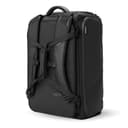
Every pick above is carrying a price pulled from Amazon’s API, dated on the card. If a bag has no buyable offer right now, we do not rank it, because a recommendation you cannot act on is not a recommendation. One consequence worth naming: the Peak Design Travel Backpack 30L publishes 20.9 x 13 x 7 in — comfortably inside the box, better on depth than anything above except the Pacsafe — and would otherwise be a pick. It is currently in a brand-wide stockout with no live price, so it sits here in prose instead. If it is back when you read this, it belongs on your shortlist.
What does not fit, and by how much
These are all bags we cover, and several are bags we recommend for other reasons. They are here with their published numbers so you can see exactly what the box costs them.
Over by an inch or more
- Osprey Farpoint 40— published 21 x 15 x 10 in. Over on width by 1 in and depth by 1 in. Still an excellent pack, still the top pick on our men’s page, and still the one that will get measured on a strict day. Our Farpoint 40 review has the rest.
- Cotopaxi Allpa 42L— published 22 x 14 x 11 in. Level on height and width, 2 in over on depth, with no margin anywhere to trade. The 42L review makes the same point and sends most buyers to the 35L instead.
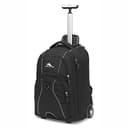
- High Sierra Freewheel Pro 40L— published 21.6 x 15.6 x 10 in. Over on width by 1.6 in and depth by 1 in. The plain Freewheel above is the one in that line that fits.
- Rockland Rolling Backpack 17 in— published 17 x 13 x 10 in. Small in height and width, 1 in over on depth.
- Osprey Farpoint 55 and Fairview 55— published 25 x 13 x 12 in and 24.6 x 13 x 11.8 in. These are 40L packs with a zip-off daypack, and the combined body is over on height and depth by a wide margin. Split the daypack off and you are carrying two bags, which is a different plan, not a smaller bag.
Over by half an inch to an inch — the near misses
These deserve their own group, because a soft-sided pack that is 0.5 in over on paper often goes through a slot when it is not packed to bursting. We will not tell you they fit, because their makers publish a number that says they do not.
- Hynes Eagle 40L— published 20.1 x 13.4 x 9.8 in. Inside on height and width; 0.8 in over on depth. It is the budget pack we recommend most often, it is soft, and it is the most likely bag in this group to pass in practice. At a strict gate, that is your risk to take, not a promise we can make.
- Peak Design Travel Backpack 45L— published 22 x 13 x 9.5 in compressed, and 11 in deep expanded. Level on height, 0.5 in over on depth before you use the expansion at all. The 45L review works through that in detail.
- Baboon to the Moon Go-Bag 32L— published 18.5 x 12 x 9.5 in. Well inside on height and width, 0.5 in over on depth.
The Osprey Sojourn 45 wheeled pack is a special case worth a line: it publishes 22 x 14 x 9 in, level with the box on every single dimension, which is why it tops the wheeled roundup. It is not a pick here because at a published 7.93 lb empty it spends more than half of a 7 kg cabin allowance on the bag itself, and this page’s job is fit, which it achieves with zero margin in three directions.
The bags we cannot rank here
Several popular budget carry-ons publish no exterior dimensions at all — the MATEIN 40L, the LOVEVOOK 40L and the Taygeer 35L among them. Their listings state a capacity and a laptop size and stop. We cover all three elsewhere on their merits, and the two 40L bags are almost certainly in the same physical class as the packs above. But “almost certainly” is not a dimension, and this page ranks on dimensions, so they are out by rule rather than by judgment.
If you already own one of them, the answer is not a spec sheet, it is a tape measure: how to measure a backpack walks through doing it the way a sizer will, at the widest point, with the bag packed the way you actually pack it.
Wheels, handles and the other things that count
Two practical points that change the math on a bag that looks like it fits.
Wheels and handles are part of the measurement. Alaska says so outright, and gate agents at every carrier treat it that way. A rolling bag’s published depth normally includes the wheel housing, but its published height may or may not include a raised handle. That is the single biggest reason so few wheeled bags qualify for a page like this one.
External pockets and compression straps do not shrink. A water bottle in a side pocket adds width a sizer will find, and a pack that is level with the box on depth is over it the moment you put a jacket under the front straps. If your bag has no margin on a dimension, keep that dimension clear.
What we would actually buy
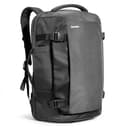
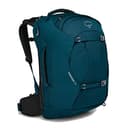
If the gate is your main worry and you want one bag to stop thinking about, the tomtoc Navigator-T66 40L is the pick: full 40L capacity, real margin on height and width, level on depth, at a fraction of the premium packs’ price. If you will be walking with it loaded and your torso suits the fit, pay the difference for the Osprey Fairview 40 and its harness. If your fare only includes a personal item, the Pacsafe Metrosafe X 20L is the dimension-safe answer.
And if you are shopping capacity rather than inches, this is the wrong page to finish on. The wider 40L field — including the packs that are over the box — is on our 40L roundup, and what size travel backpack you need argues the liters question properly. The box is a constraint, not a shopping list.