The three specs that decide it
If you want the construction explained on its own, before the picks, that is what makes a backpack waterproof — fabric, seams and closure, plus why the right answer for most trips is a dry bag inside the pack you already own.
1. The closure
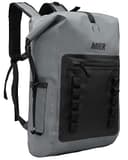
This is the big one. A roll-topthat folds three or more times and clips shut is a genuine seal — there is no opening for water to get through. A zipperis a row of interlocking teeth with gaps between them; even the good water-resistant zips are pressure-rated, not sealed, and the cheap coated ones on budget bags are not water-resistant at all once they’ve been used a few hundred times. If a bag is sold as waterproof and closes with an ordinary zip, that claim ends at the zip.
2. The seams
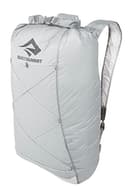
Waterproof fabric with unsewn-but-unsealed seams is a colander made of good material. The needle makes thousands of holes; unless those are taped or welded, water walks through them. Sea to Summit is unusually clear about this — on their standard Ultra-Sil day pack they state the fabric is waterproof but the pack is not, because the seams aren’t sealed and the zip is exposed. On their Dry version they state double-stitched seams sealed with high-density PU tape. Same brand, same fabric family, entirely different product.
3. The rating
Hydrostatic head is the number that quantifies fabric waterproofness: how tall a column of water the fabric holds back before it leaks through. Sea to Summit states above 2,000 mm for the Dry Day Pack, which is comfortably beyond what rain applies. Most listings publish no number at all, which is why we print “Not published” rather than a figure we can’t stand behind. And note that even a good rating comes with a limit: the same maker says the pack is not intended to be submerged.
Which of these do you actually need?
Be honest about the trip, because a truly sealed pack costs you real convenience every single day, not just on the wet ones.
- Occasional rain in cities: a weather-resistant travel pack is enough. A coated shell and a rain cover in the bottom pocket handles it, and you keep a zip you can open one-handed.
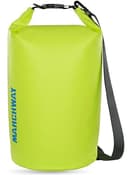
- Monsoon season, rainforest, sustained heavy rain:a sealed roll-top for the things that must stay dry — usually the electronics and a change of clothes — inside a normal pack. This is the setup most travelers should copy: a dry bag inside a good pack is more practical than making the whole pack a dry bag.
- Kayaks, boats, ferries with open decks, beach hopping:a full dry pack that floats. This is the one situation where the roll-top’s inconvenience is obviously worth it, because the failure mode is losing everything, not damp socks.
What a roll-top costs you
It is worth stating plainly, because roundups in this category rarely do. A roll-top has to be unrolled to get anything out, and rolled and clipped to close — every time, including when it’s not raining and you just want your sunglasses. There are no external pockets on a proper dry pack, because a pocket is a hole. Internal organization is nothing, so you supply it with pouches. And the shape when packed light is floppy and awkward.
That friction is the honest price of the category. Which is why the smartest version for most travelers isn’t a waterproof backpack at all: it’s a weather-resistant pack you enjoy using, plus a cheap dry sack inside it for the electronics.
Weather-resistant done well
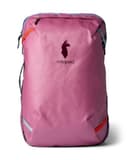
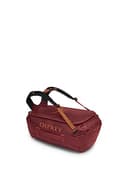
The two non-sealed picks here earn their places by being genuinely good at the 80% case. The Cotopaxi Allpa uses a TPU-coated shell with ballistic nylon panels — it sheds rain properly, and its clamshell organization is something no dry bag can offer. The Osprey Transporter pairs a water-resistant recycled nylon shell with a wide U-zip and a burly base, which is what you want on a duffel that gets put down on wet ground and thrown on roof racks.
Neither will survive immersion, and we would not claim otherwise. What they will do is get you across a city in the rain with dry clothes inside, which is the actual requirement about nine trips out of ten. Both appear in our main travel backpack roundup and the duffel roundup for the same reason.
Capacity and the roll-top illusion
A roll-top’s stated capacity is its unrolled volume. Sealing it properly costs you the top three folds, which is several liters — so a 30L roll-top packs more like a 24–26L pack when it’s closed correctly. Buy one size up from the number you think you need, not down. The flip side is genuinely useful: a half-empty roll-top rolls down small, which makes it far friendlier to an airline sizer than a structured pack of the same nominal volume. Check your carrier’s numbers on the size guide, and measure the way a gate agent would — our how to measure a backpack guide walks through it.
Care, or how people ruin these
Coated and laminated fabrics fail from the inside, not the outside. Three habits cover it: rinse salt water off the same day, because salt crystals abrade coatings; dry it fully open before storing, because a rolled damp dry bag grows mildew that eats the coating; and don’t machine wash or tumble dry it, because heat and agitation delaminate the seam tape that makes it waterproof in the first place. A dry bag treated well lasts many years; the same bag stored damp lasts one season.
The mistake buyers make
Buying a fully sealed pack for a trip that has ordinary rain in it. You pay for the roll-top on every dry day and it protects you on two wet ones. Unless you are genuinely going to be on or in water, the better spend is a good weather-resistant pack plus a five-dollar dry sack for the electronics.