Know your airline’s number before you shop
Personal-item limits vary far more than carry-on limits do, and there is no industry standard. If you fly one carrier most of the time, size to its number; if you fly several, aim for the strictest one you use.
Published personal-item dimensions on major US airlines| Airline | Personal item | What that means here |
|---|
| American, Frontier | 18 x 14 x 8 in | The generous end — a 20L structured daypack fits. |
| JetBlue | 17 x 13 x 8 in | Tighter on height; keep a 20L bag from bulging. |
| United | 17 x 10 x 9 in | The strictest common limit — 10 in of width is the one that catches people. |
| Delta, Alaska | No published dimensions | “Must fit under the seat” — softness is your friend. |
Every figure above is cited in full on the carry-on and personal-item size guide, which we keep current against each airline’s own page.
What “women’s” actually changes on a small bag
On a 35–40L travel pack, women’s fit means a shorter back panel, and that matters enormously — see our carry-on picks by torso size. On a personal item, it means something different, because there is nothing to transfer load to. Three things change:
- Strap width and curve. Narrower, S-curved straps sit inboard of the chest rather than across it. This is the single difference you will feel on a long travel day.
- Strap spacing at the top. Straps anchored closer together stay on narrower shoulders instead of sliding outward every time you reach for something.
- Bag height. A shorter body keeps the bottom of the bag off your lower back and out of your seat space. A tall 20L bag on a short back rides down and pushes you forward in the seat.
What it does not change is capacity or durability, and a “women’s” label is not a guarantee of any of the above — several bags marketed that way are simply the same bag in a different colorway. Where a pick here is a unisex bag that happens to get the strap geometry right, we say so rather than pretending it was designed for you.
Pick the job, not the biggest bag
If it is your only bag
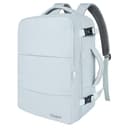
On a personal-item-only fare, you want maximum usable volume in a soft, squashable body — the Taygeer at 35L is exactly that, on the understanding that you pack it two-thirds full and no more. Fill it and it reads as a carry-on to any gate agent who is paying attention. Our personal item vs carry-on guide covers where that line actually falls.
If it is your second bag
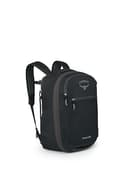
Paired with a 40L carry-on, the personal item holds the travel day: laptop, documents, layer, snacks, anything you want at your feet. A structured 20–26L bag with a padded sleeve is right, and this is where the Osprey Daylite earns its price — it is a genuine day bag at your destination too, backed by a warranty almost nothing else at this money carries. Fly it zipped down; the extra 6L is a feature for the trip home, not for the gate.
If you are working while you travel
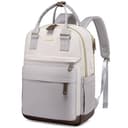
A 15.6-inch laptop, a concealed back pocket and a bag that does not look like hiking gear is a specific brief, and the LOVEVOOK covers it for well under fifty dollars. Be clear about what “anti-theft” means at this price: a hidden pocket against the back panel, not slash-resistant fabric. For a genuinely pickpocket-heavy city, step up to a real anti-theft pack instead.
If you just want a spare
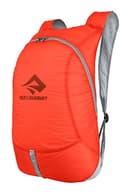
The Sea to Summit Ultra-Sil weighs 2.5 oz and stuffs to about the size of a lemon. It costs you nothing to bring and turns into a beach or market bag on arrival. It is not a laptop bag and the maker is refreshingly plain about the fabric being waterproof while the pack is not — unsealed seams, exposed zipper.
Weight is the spec nobody checks
An empty personal item can be anywhere from 2.5 ounces to well over two pounds, and on carriers that cap cabin baggage by weight rather than size that difference comes straight out of what you can pack. It also decides how the bag feels on unpadded straps: 12 lb in a 2.5 oz stuff sack is genuinely unpleasant, while the same load in a padded 26L daypack is fine. Where a maker does not publish an empty weight, our spec tables say “Not published” rather than guessing — and at this end of the market, that is most of them.
The mistake buyers make
Trusting the words “personal item” in the product title. It is a marketing claim, not a measurement, and several bags sold that way are larger than United’s published allowance before you put anything in them. Check the external dimensions against your airline, and when a listing publishes none — which is common — treat that silence as the answer.