The two kinds of minimalism
Less volume
The strongest version of minimalist travel is not a bag at all — it is a constraint. A 26L or 30L pack cannot hold a fortnight of outfits, so it stops you trying, and the packing discipline it forces is what people actually enjoy about traveling light. It is the same logic as a smaller plate.
The practical payoff is real and immediate: a sub-30L bag is a personal itemon most airlines, which means it goes under the seat in front of you, never gets gate-checked, and never needs a sizer. That single property removes most of the friction of flying. Whether your specific bag qualifies depends on its dimensions and your airline — see personal item vs carry-on.
Less complexity
The second version keeps the capacity and strips the features. One main compartment, one laptop sleeve, one external pocket, no daisy chains, no molle, no logo the size of your hand. The argument for it is not aesthetic (though it usually is aesthetic): a bag with three places to put something is a bag where you always know where things are. A bag with fourteen is a bag you search.
The counter-argument is that organization is genuinely useful, and stripping it out means you supply it yourself with packing cubes and a tech pouch. That is a trade many experienced travelers make deliberately, because pouches can be rearranged and sewn-in compartments cannot.
What minimalism costs you
Worth stating plainly, because roundups in this category tend to sell the romance and skip the invoice.
No structure means no load transfer.Simple packs almost never have a frame sheet or a real hip belt, so everything you put in rides on your shoulders. At 15 lb that is fine. At 25 lb it is not, and no amount of clean design fixes it. If you carry weight, the harness matters more than the philosophy — premium packs exist mostly to solve this.
Roll-tops and single compartments mean digging. A clamshell pack opens flat and shows you everything; a top-loading minimalist pack shows you the top item. The fix is cubes, and the fix works, but it is a fix rather than a non-problem.
Small bags punish bulky gear. A 26L pack and a winter coat are not compatible. Minimalist travel is substantially easier in warm places, and anyone telling you otherwise has not tried it in February.
Ultralight fabric is genuinely fragile. A 2.5 oz packable daypack is a marvel and it is also silnylon: it will not survive being dragged, and it is not meant to. Buy it as a second bag, not a main one. If what you actually want is a light bag rather than a simple one, that is a different question with a different answer, ranked on published empty weight in best lightweight travel backpacks.
How to choose between these five
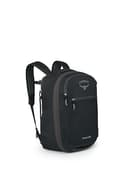
If you want one bag for the whole trip and you travel light, the Osprey Daylite Expandable 26+6 is the pick — a genuine personal-item-sized pack with the option of six more liters when you need them, from a brand whose warranty means something. Full write-up in our Daylite Expandable review.
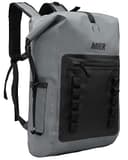
If you want the clean-design version at real travel capacity, the MIER roll-top 30L is the most restrained 30L we cover: no external clutter, a roll-top closure instead of a zip, and a shape that rolls down when it’s half empty. Waterproofing is a bonus rather than the point — the sealed-versus-resistant distinction is covered in our waterproof roundup.
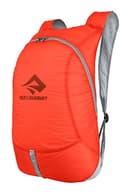
If minimalism means “weighs nothing”, the Sea to Summit Ultra-Sil Day Pack is 2.5 oz and stows to roughly the size of a lime. It is the second bag that costs you nothing to bring, and Sea to Summit is unusually honest that it is water-resistant rather than waterproof, because the seams are not sealed.
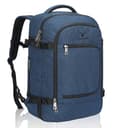
If you need a full carry-on that is still simple, the Hynes Eagle 40L is the lightest 40L in our registry at 2.2 lb with a straightforward clamshell layout and none of the compartment maximalism of the premium tier. It is also the cheapest way to reach 40L honestly — see travel backpacks under $100.
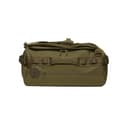
If you want it to last and look like something, the Baboon to the Moon Go-Bag 32L is a tough, deliberately plain carry-on duffel-pack. It is a style purchase with real build behind it, and at 32L it is a short-trip bag rather than a fortnight one.
If “fewer liters” has to come with a real shell and a laptop sleeve, the one small pack we cover that is built rather than pared down is the Peak Design Travel Backpack 30L — 27L standard, 33L expanded, published inside the carry-on box in both modes, with a 16 in laptop sleeve and a lifetime warranty. It is not minimalist in price or in weight (3.17 lb), which is exactly the trade the Peak Design 30L review is about.
The habit that matters more than the bag
Minimalist packing is a laundry decision before it is a gear decision. Committing to washing things every three or four days collapses a two-week packing list to a five-day one, and that single change does more for bag size than any product on this page. Our one-bag travel packing list is built around that assumption, and how to pack for two weeks in a carry-on shows what it looks like at the extreme.