The numbers that actually apply abroad
There is no international standard, which is the root of the problem. What exists is a set of national and airline conventions, and the important ones for a traveler buying a pack are these:
- US majors (American, Delta, United, JetBlue, Alaska): 22 x 14 x 9 inches for a carry-on. A 40L pack fits, usually with the sizer as the only risk.
- European budget carriers: two-tier. The free bag is small enough to go under the seat — Ryanair 40 x 20 x 25 cm, easyJet 45 x 36 x 20 cm — and the overhead-sized cabin bag is a paid extra with its own weight limit.
- Weight limits: the quiet one. Many non-US carriers cap cabin baggage by weight as well as size, and a 40L pack full of clothes and a laptop is easily past ten kilograms. A US traveler has usually never once been weighed.
Every number above is cited to the airline’s own page in our sources, and the full table is on the carry-on size guide. Check yours before you buy anything — this is the one category where the right answer genuinely depends on who you fly.
Why 35L is the international answer
A 35L pack clears sizers a 40L pack fails, and the difference is not marginal. The reason is depth: soft packs grow outward when full, and depth is the dimension every sizer measures most strictly. A 35L bag packed full is usually still inside its stated depth; a 40L bag packed full is usually not.
The practical cost is about a day and a half of clothes, and packing cubesclaw back most of that. The practical benefit is that you stop having to think about the sizer at all. For multi-country trips with several short-haul legs on different carriers, that is worth considerably more than the extra liters — you only need one gate agent to disagree with you to lose the price difference between every bag on this page.
The features that matter more abroad
Lockable zippers
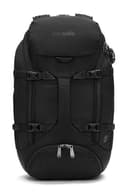
Two zip pulls that meet and take a small lock is a five-dollar feature that changes how a bag behaves in hostels, on overnight trains and in luggage storage. It is not security against a determined thief — fabric cuts — but it stops the casual opportunist and it stops your bag being opened while it sits on a rack behind you. Our security pick builds this in properly, along with slash-resistant panels; the reasoning behind those tiers is in our anti-theft roundup.
Stowable straps
The moment a bag is gate-checked — which happens more often on small international aircraft — loose shoulder straps and a dangling hip belt are what get torn off by a conveyor. A pack with a zip panel that covers the harness survives that; one without it is one bad transfer from a broken buckle.
A clamshell opening
On a trip with eight beds in six weeks, how a bag opens is the feature you interact with every day. A clamshell lies flat and shows you everything; a top-loader makes you excavate. Every pack in this roundup opens flat, and that is not a coincidence.
A separate laptop access
Security procedures differ by country and some still require laptops out of bags. A sleeve you can reach without opening the main compartment saves you repacking your clothes on a metal table in front of a queue.
The personal-item strategy
On carriers whose free allowance is under-seat sized, the winning move is not a smaller travel pack — it’s two bags. A genuinely small personal item that always flies free, plus a main pack you either pay to bring into the cabin or check cheaply.
That is why a budget under-seat pack is in this list. On a two-week trip with four budget-carrier legs, the pack that reliably fits under the seat is doing more financial work than the expensive one. Pair it with the personal item vs carry-on guide, and with the under-seat roundupif that’s the lane you’re in.
Packing for weight, not just volume
If your carrier weighs cabin bags, the constraint is the scale rather than the sizer, and that changes what you buy. Empty weight becomes a real spec: a pack that weighs 2.65 lb rather than 3.42 lb hands you a third of a kilogram of allowance before you have packed anything. That is why our value pick — light, structured, published numbers — is more competitive internationally than it looks domestically.
The other half is what you put in. Shoes and outerwear are the heavy items; wear the heaviest of each onto the plane. Denim is the single worst weight-to-usefulness item most people pack. Our one-bag packing list works through a capsule that survives being weighed.
The mistake buyers make
Buying for the flight they picture — a long-haul on a full-service carrier with a generous overhead bin — and forgetting the four short hops inside the trip, which are on the airlines with the tape measures. Size your bag for the strictest leg of the itinerary, not the longest one.