Passage & Pier

Best Travel Daypacks

The second bag — what you carry once the main pack is at the hotel. Packable stuff-sacks, structured day bags and the ones that double as your personal item, compared on the specs that decide it.

By Stephen V.Last updated How we choose

A travel daypack is the bag you actually use most. Your main pack spends the trip in a wardrobe; the daypack goes to the market, up the hill, onto the ferry and into the seat pocket in front of you. It is also the bag people buy worst, because the category contains two completely different products sold under one name.

One is a packable — a two-ounce nylon sack that folds into its own pocket and costs you nothing to carry until you need it. The other is a structured daypackwith padding, a back panel and a laptop sleeve, which is a real bag you have to find room for. They are not competitors; they are answers to different questions. This roundup separates them, then tells you which one your trips actually call for. Every figure below comes from published specs and, where a maker doesn’t publish one, we say so instead of guessing.

How this is funded:we earn a commission if you buy through our links, at no extra cost to you. It never changes which bag we recommend, and we’ll tell you when we’d skip one. Full disclosure.

Quick picks

Ranked on capacity, carry-on fit and who each bag actually suits. Select a row to jump to the full write-up. We have not flown every one of these — here is exactly what we do instead.

#ProductBest forPrice
1
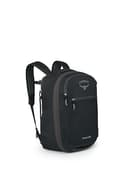
Osprey Daylite Expandable 26+6 Travel Pack

Osprey Daylite Expandable 26+6 Travel Pack

The daypack that does a second job. 26 liters is a genuine day bag — city walking, a laptop, a jacket — and the expansion adds six more when the flight home has to swallow what the trip accumulated. It's the one pack here we'd happily use as a personal item under the seat and as the day bag once you land.

Best overall
$81.95 · View on Amazon

$110.0026% off

Price as of September 4, 2026. #ad How we’re funded

2
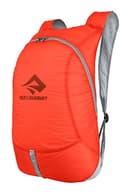
Sea to Summit Ultra-Sil Ultralight Day Pack 20L

Sea to Summit Ultra-Sil Ultralight Day Pack 20L

Twenty liters that weigh two and a half ounces and stuff into their own pocket at roughly the size of a lemon. This is the second bag you carry because you can't feel it — a beach, a market, a day hike — and it is emphatically not a bag to carry a laptop or a heavy load in.

Best packable
$37.39 · View on Amazon

$49.9525% off

Price as of September 4, 2026. #ad How we’re funded

3
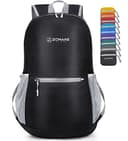
ZOMAKE Ultra Lightweight Packable Backpack 20L

ZOMAKE Ultra Lightweight Packable Backpack 20L

The cheapest sensible way to own a second bag. It folds into its own pocket, it's water-resistant, and it costs about what a hotel breakfast does — which is the honest argument for it. Build quality is what that price implies: fine for a few trips a year, not a bag to trust with anything heavy.

Best budget
$14.39 · View on Amazon

$15.9910% off

Price as of September 4, 2026. #ad How we’re funded

4

Pacsafe Metrosafe X 20L Anti-Theft Backpack

The real anti-theft pick — not a hidden pocket, but a system: slash-resistant fabric, locking zippers and RFID-blocking pockets. A 20L daypack for pickpocket-heavy cities where you want to stop worrying about your bag. Priced accordingly.

Best anti-theft
5
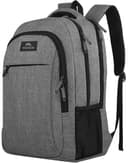
MATEIN Travel Laptop Backpack (Anti-Theft)

MATEIN Travel Laptop Backpack (Anti-Theft)

One of Amazon's best-selling laptop backpacks for a reason: it's a cheap, sensible personal-item bag with a hidden back pocket, a USB pass-through and a luggage sleeve. Not a travel 'system,' just a reliable day-and-commute bag that flies well as your second item.

Best for carrying a laptop
$18.69 · View on Amazon

$33.9945% off

Price as of September 4, 2026. #ad How we’re funded

The picks in full

#1Best overall

Osprey Daylite Expandable 26+6 Travel Pack

The daypack that does a second job. 26 liters is a genuine day bag — city walking, a laptop, a jacket — and the expansion adds six more when the flight home has to swallow what the trip accumulated. It's the one pack here we'd happily use as a personal item under the seat and as the day bag once you land.

Strengths

  • 26L handles a real day out, not just a water bottle and a wallet
  • The +6L expansion is there for the trip home, then zips away
  • Osprey's All Mighty Guarantee, which almost nothing else at daypack money carries

Trade-offs

  • Expanded, it stops being reliably personal-item sized — zip it down to fly
  • Costs several times what a packable stuff-sack daypack does
Capacity26 L
Weight (empty)Not published
External dimensionsNot published
Carry-on fit (our read)Convertible / expandable
Laptop sleeveNot published
MaterialNot published
WarrantyOsprey All Mighty Guarantee

Fit note. The '26+6' is the whole spec. Fly it at 26L, where a soft pack of that size sits inside most personal-item allowances, and treat the extra 6L as an at-destination feature — expanding it at the gate is exactly when you least want to be measured.

Specs read from the product listing, on August 11, 2026. “Not published” means the maker does not state that figure.

#2Best packable

Sea to Summit Ultra-Sil Ultralight Day Pack 20L

Twenty liters that weigh two and a half ounces and stuff into their own pocket at roughly the size of a lemon. This is the second bag you carry because you can't feel it — a beach, a market, a day hike — and it is emphatically not a bag to carry a laptop or a heavy load in.

Strengths

  • 2.5 oz and packs to about 2 x 4 x 7 inches — it disappears in a main bag
  • 20L is real capacity, not a token amount
  • Simple, durable siliconized nylon with nothing to break

Trade-offs

  • No padding, no frame, no laptop sleeve — thin straps bite under weight
  • Water-resistant only: unsealed seams and an exposed zipper let water in
Capacity20 L
Weight (empty)0.16 lb
External dimensionsNot published
Carry-on fit (our read)Personal-item sized
Laptop sleeveNot published
MaterialUltra-Sil siliconized nylon
WarrantyNot published

Fit note. Sea to Summit publishes the numbers that matter for a packable: 20L capacity, 2.5 oz (72 g) empty, and a packed size of about 2 x 4 x 7 in. They also state plainly that the fabric is waterproof but the pack is not — the seams aren't sealed and the zipper isn't covered. That honesty is why it's here.

Specs read from the product listing, on August 11, 2026. “Not published” means the maker does not state that figure.

#3Best budget

ZOMAKE Ultra Lightweight Packable Backpack 20L

The cheapest sensible way to own a second bag. It folds into its own pocket, it's water-resistant, and it costs about what a hotel breakfast does — which is the honest argument for it. Build quality is what that price implies: fine for a few trips a year, not a bag to trust with anything heavy.

Strengths

  • Packs into its own pocket and weighs almost nothing in a main bag
  • 20L stated capacity — the same as packables costing three times more
  • Water-resistant fabric handles a shower on the walk back

Trade-offs

  • Thin unpadded straps and no frame — 20 lb in it is genuinely uncomfortable
  • No published weight or dimensions, and no warranty to speak of
Capacity20 L
Weight (empty)Not published
External dimensionsNot published
Carry-on fit (our read)Personal-item sized
Laptop sleeveNot published
MaterialWater-resistant nylon
WarrantyNot published

Fit note. Capacity is stated, weight is not — which is the usual pattern at this price and worth knowing before you compare it to a Sea to Summit on paper. Packables live or die on strap comfort under load, and unpadded webbing is the corner cut here.

Specs read from the product listing, on August 11, 2026. “Not published” means the maker does not state that figure.

#4Best anti-theft

Pacsafe Metrosafe X 20L Anti-Theft Backpack

The real anti-theft pick — not a hidden pocket, but a system: slash-resistant fabric, locking zippers and RFID-blocking pockets. A 20L daypack for pickpocket-heavy cities where you want to stop worrying about your bag. Priced accordingly.

Strengths

  • Slash-resistant paneling and lockable zipper pulls — actual security, not just a hidden pocket
  • RFID-blocking pockets for cards and passport
  • Comfortable, low-key 20L daypack

Trade-offs

  • Security hardware adds weight and cost versus a plain daypack
  • 20L is a day bag, not a travel main-bag
Capacity20 L
Weight (empty)1.87 lb
External dimensions17.7 x 11.8 x 5.1 in
Carry-on fit (our read)Personal-item sized
Laptop sleeve16 in
Material750D recycled polyester, eXomesh slashguard
WarrantyPacsafe 5-year limited warranty

Fit note. This is what 'anti-theft' should mean: slash-resistant fabric and locking zippers, not a marketing sticker. Overkill for a quiet trip; exactly right for a crowded market or a night train.

Specs read from the product listing, on July 21, 2026. “Not published” means the maker does not state that figure.

#5Best for carrying a laptop

MATEIN Travel Laptop Backpack (Anti-Theft)

One of Amazon's best-selling laptop backpacks for a reason: it's a cheap, sensible personal-item bag with a hidden back pocket, a USB pass-through and a luggage sleeve. Not a travel 'system,' just a reliable day-and-commute bag that flies well as your second item.

Strengths

  • Hidden anti-theft back pocket and lockable main zippers
  • USB pass-through and a padded 15.6" laptop sleeve
  • Luggage strap sleeve to stack it on a roller

Trade-offs

  • A commuter bag, not a one-bag travel pack
  • Budget materials — functional, not premium
CapacityNot published
Weight (empty)Not published
External dimensionsNot published
Carry-on fit (our read)Personal-item sized
Laptop sleeve15.6 in
MaterialNot published
WarrantyNot published

Fit note. 'Anti-theft' here means a concealed back pocket and lockable zippers — real deterrents for a day bag, not a slash-proof security pack. As a cheap personal item it's hard to beat.

Specs read from the product listing, on July 21, 2026. “Not published” means the maker does not state that figure.

Packable or structured? Answer this first

Everything else follows from this one decision, so make it honestly.

Buy a packableif the daypack’s job is occasional: a beach day, a market run, carrying a jacket and a water bottle on a walk. A packable weighs two to five ounces, disappears into a corner of your main bag, and costs less than a dinner. Its weakness is the moment you put weight in it — thin unpadded webbing on bare shoulders is genuinely unpleasant past about ten pounds, and there is no back panel, no frame and no laptop protection.

Buy a structured daypackif you will use it every day, carry a laptop or camera in it, or want it to double as your personal item on the plane. You are buying padding, a shaped back panel, organization and — in the case of our top pick — a warranty. The cost is real: it takes up space in your main bag on the days you don’t use it, which for a one-bag traveler is the whole objection.

A lot of experienced travelers own both, and that is not indecision. The structured bag flies as the personal item, and the packable lives inside the main pack for the days the structured one is too much bag.

The personal-item trick, done properly

The best-value thing a daypack can do is fly free as your personal item, which turns a second bag into extra allowance rather than extra cost. That only works if it fits the under-seat space, and the numbers are tighter than people expect: United publishes 17 x 10 x 9 inches for a personal item, and several carriers simply say it must fit under the seat in front of you — a rule that is enforced by the physical space, not a tape measure.

A 20L soft daypack that isn’t stuffed generally slides under. A 26L pack expanded to 32L generally does not. This is why our top pick’s expansion is an at-destination feature: fly it zipped down, expand it on the trip home when the pack is checked or when you’ve accepted you’re paying for a bag. The full airline-by-airline numbers live on our carry-on size guide, and the difference between the two allowances is worked through in personal item vs carry-on.

How much capacity you actually need

Daypacks are sold from about 10L to 30L, and the useful band is narrower than that.

  • 10–15L: a wallet, phone, water bottle and a thin layer. Fine for a city afternoon, useless the moment weather changes or you buy something.
  • 18–22L: the sweet spot, and where nearly every good travel daypack sits. It takes a jacket, a liter of water, a camera, lunch and a paperback without becoming a bag you resent carrying.
  • 25–30L:a small travel pack more than a daypack. Worth it only if it is doing double duty as your personal item or if you carry camera gear. Bigger bags get packed heavier — that rule holds at every size.

Note that four of our five picks sit at 20L or thereabouts. That is not laziness in the selection; it is where the category actually works.

Weight, and the packable maths

For a packable, empty weight is the entire proposition, and the honest comparison is stark. The Sea to Summit Ultra-Sil weighs a published 2.5 ouncesand packs to roughly 2 x 4 x 7 inches. Budget packables typically don’t publish a figure at all, which is itself informative — they are usually heavier, and the fabric is usually thicker to compensate for less refined construction.

Where the budget option genuinely wins is on the shrug factor. A packable that cost you fifteen dollars can be left on a beach, lent to someone, or thrown out at the end of a trip. One that cost fifty cannot. If you are the kind of traveler who loses things, the cheap one is the smart buy, and we’d rather say that than upsell you.

Straps: the spec that decides comfort

No daypack has a hip belt worth the name, so the shoulder straps carry everything. Three things separate a comfortable daypack from an uncomfortable one, and only one of them is usually published.

Strap width spreads the load; thin webbing concentrates it into a line across your collarbone. Padding is the obvious one, and its absence is exactly what makes packables miserable when loaded. A sternum strapcosts the maker almost nothing and stops the straps sliding outward, which is most of the difference on a long walk. Check the photos for a sternum strap before you buy anything in this category — on cheap packables it is the first thing cut.

Features that are worth less than they look

USB charging ports. The port is a cable, not a battery; you still supply the power bank. It adds a hole in the fabric and a failure point, and plugging a cable into the outside of your own bag saves you approximately nothing.

“Waterproof” on a zippered daypack.Almost always means a coated fabric with unsealed seams and an exposed zipper — which is water-resistant. Sea to Summit is unusually straight about this, stating plainly that their standard Ultra-Sil is water-resistant only because the seams aren’t sealed. If you genuinely need dry contents, buy a roll-top: our waterproof roundup covers what that actually takes.

RFID pockets. Harmless, occasionally useful, never a reason to choose one bag over another. The anti-theft features that matter are locking zips and slash-resistant panels, and only one bag in this roundup has them.

Pairing it with your main pack

The daypack and the travel pack have to work as a system, and two details decide whether they do. First, where the daypack rides in transit: on your front while your main pack is on your back is the standard, and it is much less ridiculous than it sounds — it balances the load and keeps your valuables where you can see them. Second, whether the daypack can hold the valuables so that your main bag can be gate-checked at a moment’s notice without you losing your passport, laptop and medication. That second point is the argument for a structured daypack over a packable, and it is a strong one.

If your main pack is a 40L that already runs at the carry-on limit — see the main travel backpack roundup— keep the daypack small and soft, because on a strict carrier the two bags are measured as two bags.

The mistake buyers make

Buying a structured 30L daypack to “have the option,” then discovering it eats a quarter of the main pack on every travel day. Capacity you carry unused is the most expensive kind. Size the daypack to the day you’ll actually have, not to the biggest day you can imagine.
Frequently asked questions

What size daypack is best for travel?

Around 20 liters. It takes a jacket, water, a camera and lunch without tempting you to overpack, and a soft 20L pack generally slides under an airline seat as your personal item. Go to 25-30L only if it is doing double duty as your personal item on every flight or you carry camera gear.

Can a daypack be my personal item on a plane?

Usually, if it's soft and not stuffed. United publishes 17 x 10 x 9 inches for a personal item and several carriers simply require it to fit under the seat in front of you. A 20L daypack normally clears; an expandable one expanded, or a 30L pack packed full, often doesn't. Check your airline's number before you rely on it.

Is a packable daypack worth it?

If the daypack's job is occasional, yes — a 2.5 oz sack that folds into its own pocket costs you nothing to carry until the day you need it. If you'll use it daily or carry a laptop in it, no: unpadded webbing on bare shoulders is genuinely unpleasant past about ten pounds, and there's no protection for anything fragile.

Do I need both a travel backpack and a daypack?

Most one-bag travelers end up wanting both, because they do different jobs — the main pack moves your life between cities, the daypack carries your day. The cheapest version of that is a good main pack plus a packable that weighs a few ounces. The best version is a structured daypack that also flies as your personal item.

Sources

Keep reading